Mobile, VR, Web
Product Owner, UX/UI Lead
Ameliate CBT-VR & Web Suite
VR and web-based tool bundle designed to make cognitive-behavioural therapy more accessible and engaging.
Scroll down
to see more
"As a user, I want therapy to be engaging and easier to access."
"As a user, I want therapy to be engaging and easier to access."
The Project
Overview
Ameliate set out to explore how psychological interventions, especially CBT, could be delivered through immersive technology and digital tools. The main challenge was to design experiences that were clinically grounded, engaging, and usable by both everyday users and mental-health professionals. We also needed to expand beyond VR to reach wider audiences, meaning the same therapeutic concepts had to be translated into an accessible, mobile-friendly web app.
Client: Ameliate
Timeline: 2020-2024
Role: CEO, Product Owner, UX/UI Lead
Team: 3–5 person interdisciplinary team
Tools: Sketch, Figma, Unity, Bubble, Miro, GitHub
Deliverables: Oculus VR app, Web app
Design process
Process
Content
Research and Discovery
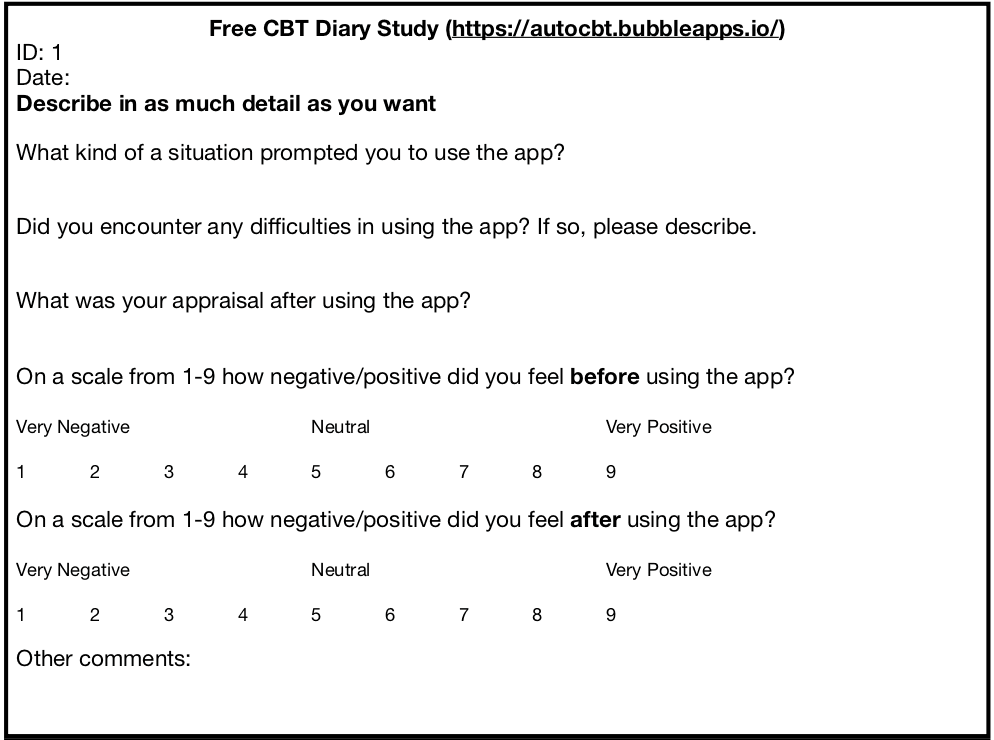
The project originated from an early diary study conducted at the University of Twente, which tested whether a self-administered CBT tool could support users in their daily lives. Findings showed strong mood-improvement potential, but also identified some potential usability issues caused by too many choices in the UI. After our graduation, we launched our start-up. To deepen our understanding, we conducted interviews with therapists and people in therapy. These discussions revealed expectations for clarity, guidance, easy interaction patterns, and the importance of tracking progress over time. Early question-driven exploration focused on: Which CBT components translate effectively to VR and web? What level of interactivity supports the therapeutic process? How can cognitive biases and emotional states be captured meaningfully?
1
Research and Discovery
The project originated from an early diary study conducted at the University of Twente, which tested whether a self-administered CBT tool could support users in their daily lives. Findings showed strong mood-improvement potential, but also identified some potential usability issues caused by too many choices in the UI. After our graduation, we launched our start-up. To deepen our understanding, we conducted interviews with therapists and people in therapy. These discussions revealed expectations for clarity, guidance, easy interaction patterns, and the importance of tracking progress over time. Early question-driven exploration focused on: Which CBT components translate effectively to VR and web? What level of interactivity supports the therapeutic process? How can cognitive biases and emotional states be captured meaningfully?
1
Research and Discovery
The project originated from an early diary study conducted at the University of Twente, which tested whether a self-administered CBT tool could support users in their daily lives. Findings showed strong mood-improvement potential, but also identified some potential usability issues caused by too many choices in the UI. After our graduation, we launched our start-up. To deepen our understanding, we conducted interviews with therapists and people in therapy. These discussions revealed expectations for clarity, guidance, easy interaction patterns, and the importance of tracking progress over time. Early question-driven exploration focused on: Which CBT components translate effectively to VR and web? What level of interactivity supports the therapeutic process? How can cognitive biases and emotional states be captured meaningfully?
1
Ideation and Design Process
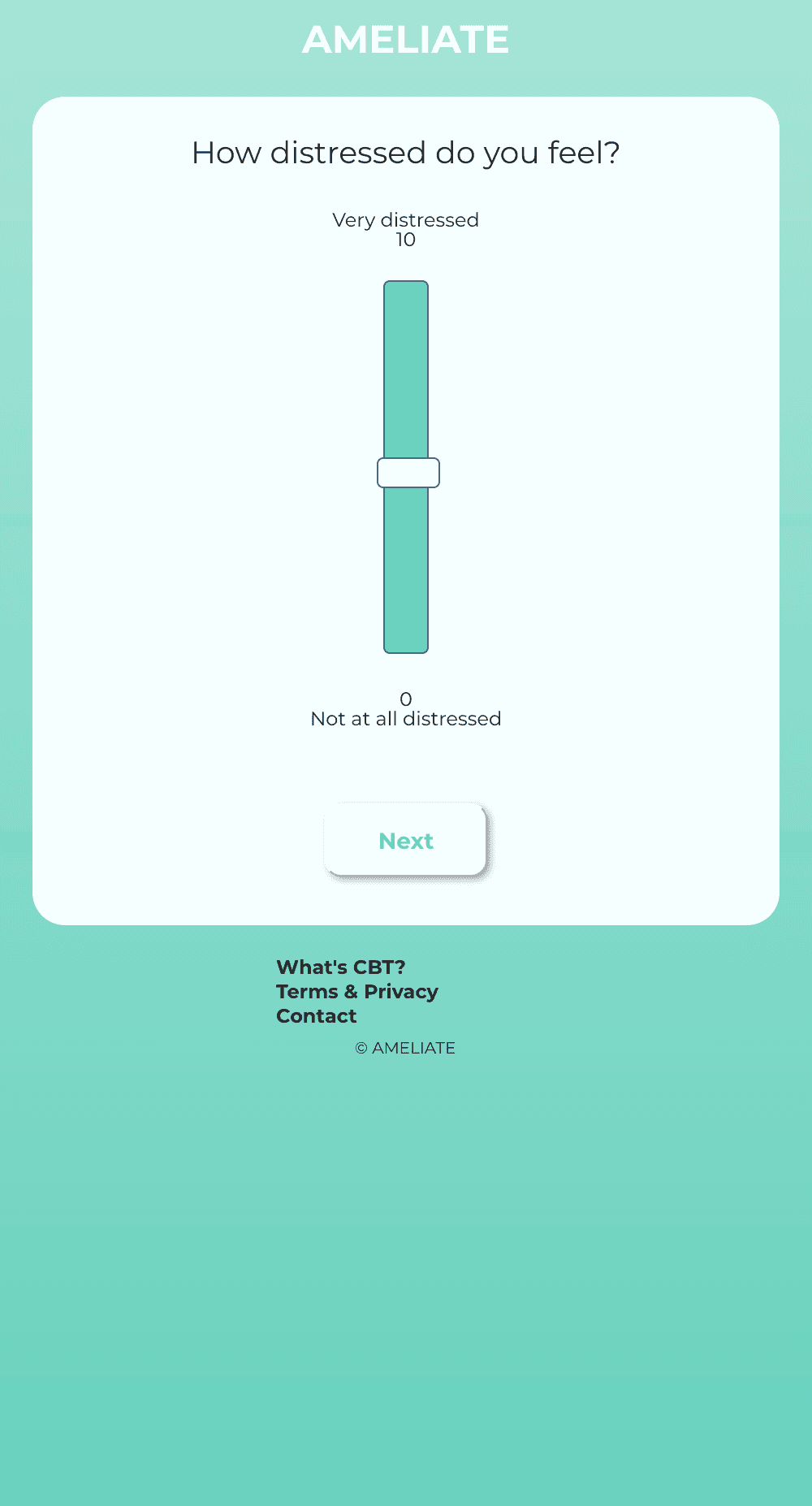
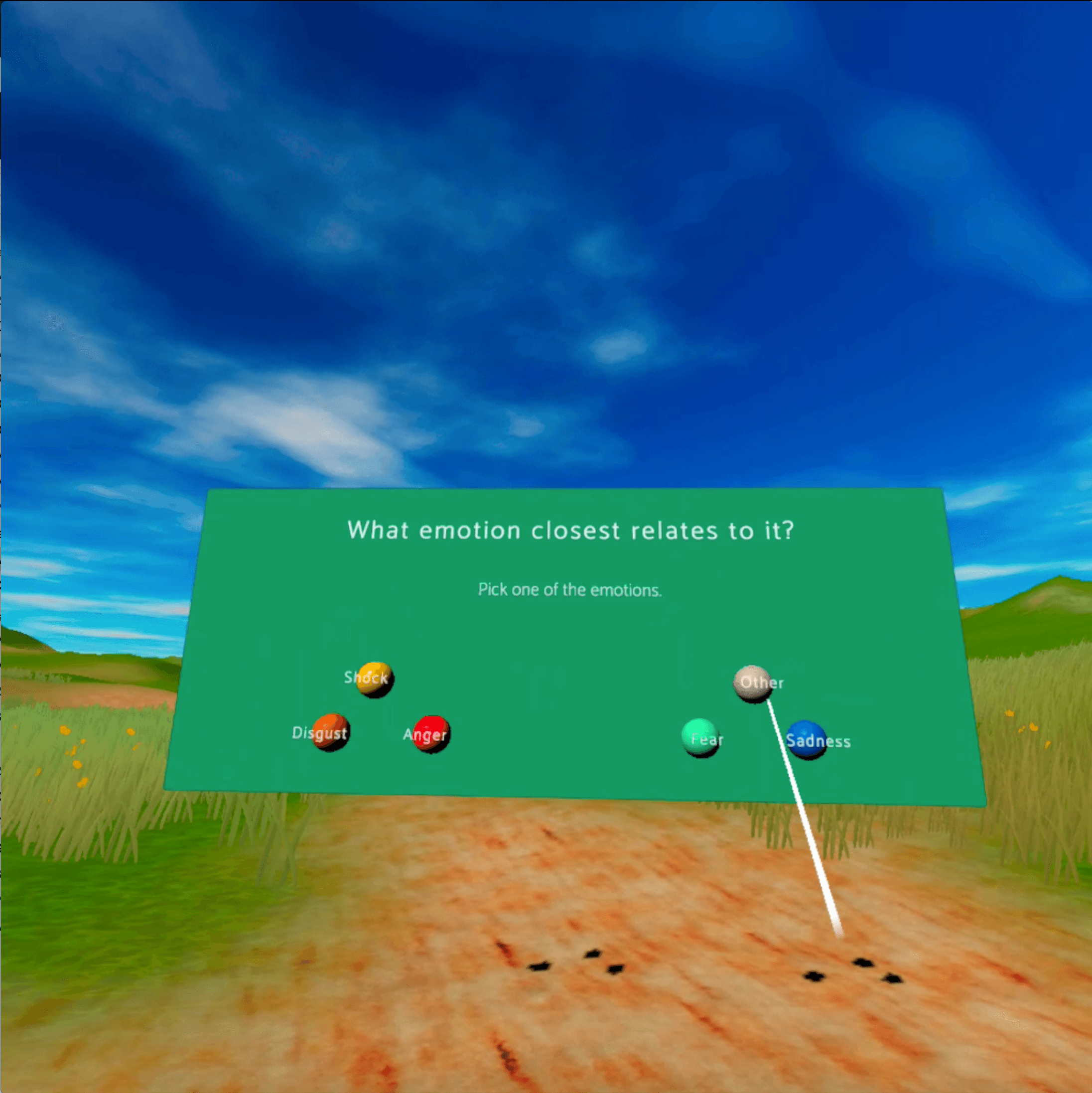
We adopted a participatory design approach, involving therapists and end-users throughout the development cycle. Key design milestones included: Wireframing & concept development: Mapping the CBT journey and breaking it into steps suitable for VR and web flows. Iterative prototyping: Building early interaction prototypes in Sketch, Unity, and Bubble. Refining the emotional flow: Improving how users select emotions, recognize cognitive distortions, and reflect on context. Visual & interaction design: Making the experience more immersive and intuitive through clearer pathways, interactive emotion pickers, and contextual prompts. Feature expansion: Adding session history, progress tracking, and therapist-accessible dashboards. User feedback consistently guided each iteration, ensuring the product stayed grounded in real therapeutic needs.
2
Ideation and Design Process
We adopted a participatory design approach, involving therapists and end-users throughout the development cycle. Key design milestones included: Wireframing & concept development: Mapping the CBT journey and breaking it into steps suitable for VR and web flows. Iterative prototyping: Building early interaction prototypes in Sketch, Unity, and Bubble. Refining the emotional flow: Improving how users select emotions, recognize cognitive distortions, and reflect on context. Visual & interaction design: Making the experience more immersive and intuitive through clearer pathways, interactive emotion pickers, and contextual prompts. Feature expansion: Adding session history, progress tracking, and therapist-accessible dashboards. User feedback consistently guided each iteration, ensuring the product stayed grounded in real therapeutic needs.
2
Ideation and Design Process
We adopted a participatory design approach, involving therapists and end-users throughout the development cycle. Key design milestones included: Wireframing & concept development: Mapping the CBT journey and breaking it into steps suitable for VR and web flows. Iterative prototyping: Building early interaction prototypes in Sketch, Unity, and Bubble. Refining the emotional flow: Improving how users select emotions, recognize cognitive distortions, and reflect on context. Visual & interaction design: Making the experience more immersive and intuitive through clearer pathways, interactive emotion pickers, and contextual prompts. Feature expansion: Adding session history, progress tracking, and therapist-accessible dashboards. User feedback consistently guided each iteration, ensuring the product stayed grounded in real therapeutic needs.
2
Testing and Validation
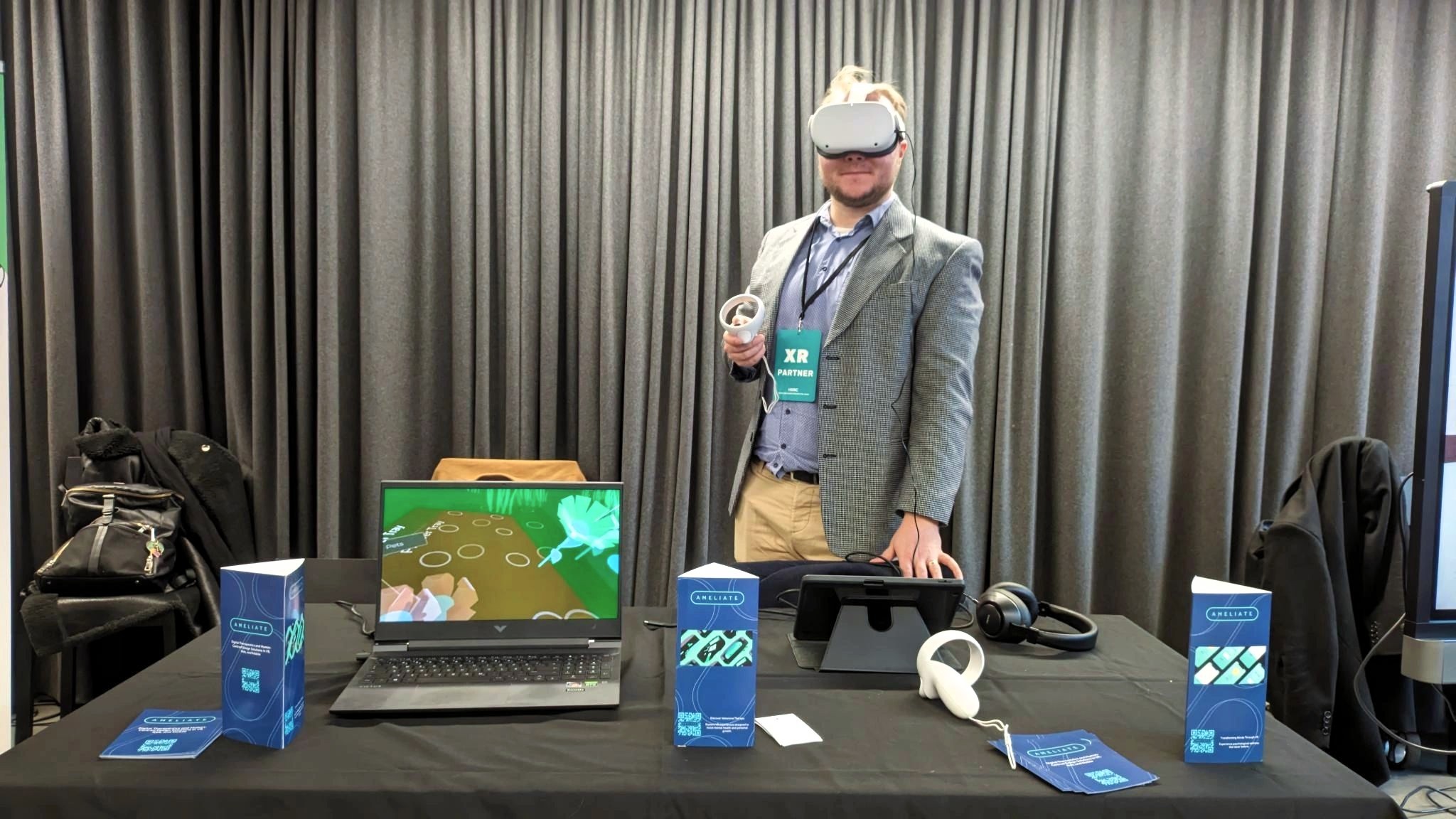
As a medical application, the validation process was more rigorous than with other applications. Having a background in psychology, I knew how to conduct simple self-reported mood inventory scales. We ran user tests and non-clinical benchmarks ourselves but for clinical validation we sought extra help. Our app was taken for clinical validation at the psychiatric hospital of Vilnius and the pilot results were promising. Testing was continuous and multi-layered: Diary Study: Verified early usability and impact on daily mood. Think-Aloud Sessions: Revealed how the users actually used the app and helped simplify choices. User Interviews & Surveys: Assessed emotional impact using tools such as the Brief Mood Introspection Scale (BMIS). VR Pilot Testing: Our CBT-VR app underwent pilot evaluation at the Psychiatric Hospital of Vilnius, confirming early indicators of mood improvement. Feedback cycles directly influenced UI clarity, emotional logic, and the naturalness of interactions - especially in VR.
3
Testing and Validation
As a medical application, the validation process was more rigorous than with other applications. Having a background in psychology, I knew how to conduct simple self-reported mood inventory scales. We ran user tests and non-clinical benchmarks ourselves but for clinical validation we sought extra help. Our app was taken for clinical validation at the psychiatric hospital of Vilnius and the pilot results were promising. Testing was continuous and multi-layered: Diary Study: Verified early usability and impact on daily mood. Think-Aloud Sessions: Revealed how the users actually used the app and helped simplify choices. User Interviews & Surveys: Assessed emotional impact using tools such as the Brief Mood Introspection Scale (BMIS). VR Pilot Testing: Our CBT-VR app underwent pilot evaluation at the Psychiatric Hospital of Vilnius, confirming early indicators of mood improvement. Feedback cycles directly influenced UI clarity, emotional logic, and the naturalness of interactions - especially in VR.
3
Testing and Validation
As a medical application, the validation process was more rigorous than with other applications. Having a background in psychology, I knew how to conduct simple self-reported mood inventory scales. We ran user tests and non-clinical benchmarks ourselves but for clinical validation we sought extra help. Our app was taken for clinical validation at the psychiatric hospital of Vilnius and the pilot results were promising. Testing was continuous and multi-layered: Diary Study: Verified early usability and impact on daily mood. Think-Aloud Sessions: Revealed how the users actually used the app and helped simplify choices. User Interviews & Surveys: Assessed emotional impact using tools such as the Brief Mood Introspection Scale (BMIS). VR Pilot Testing: Our CBT-VR app underwent pilot evaluation at the Psychiatric Hospital of Vilnius, confirming early indicators of mood improvement. Feedback cycles directly influenced UI clarity, emotional logic, and the naturalness of interactions - especially in VR.
3
Results
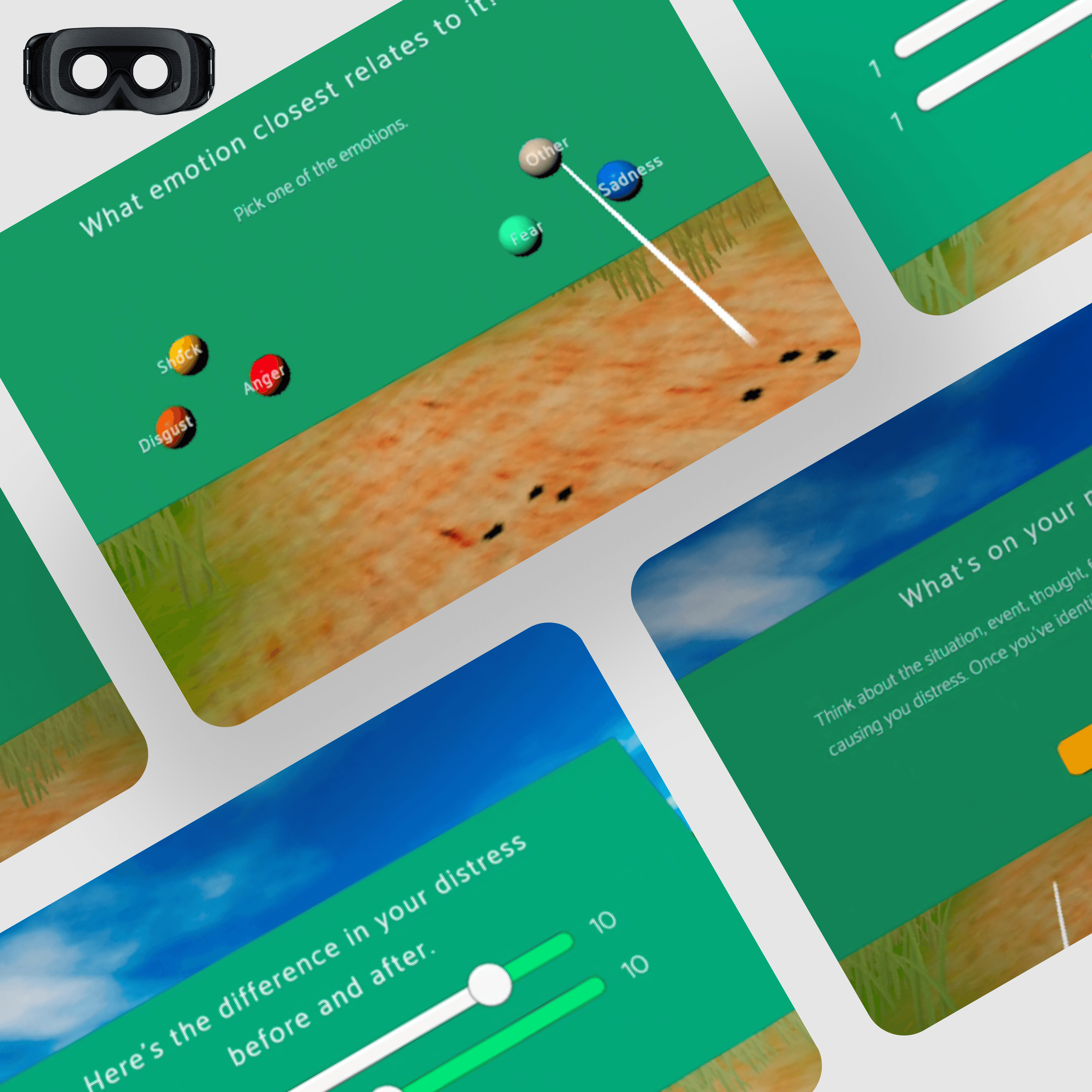
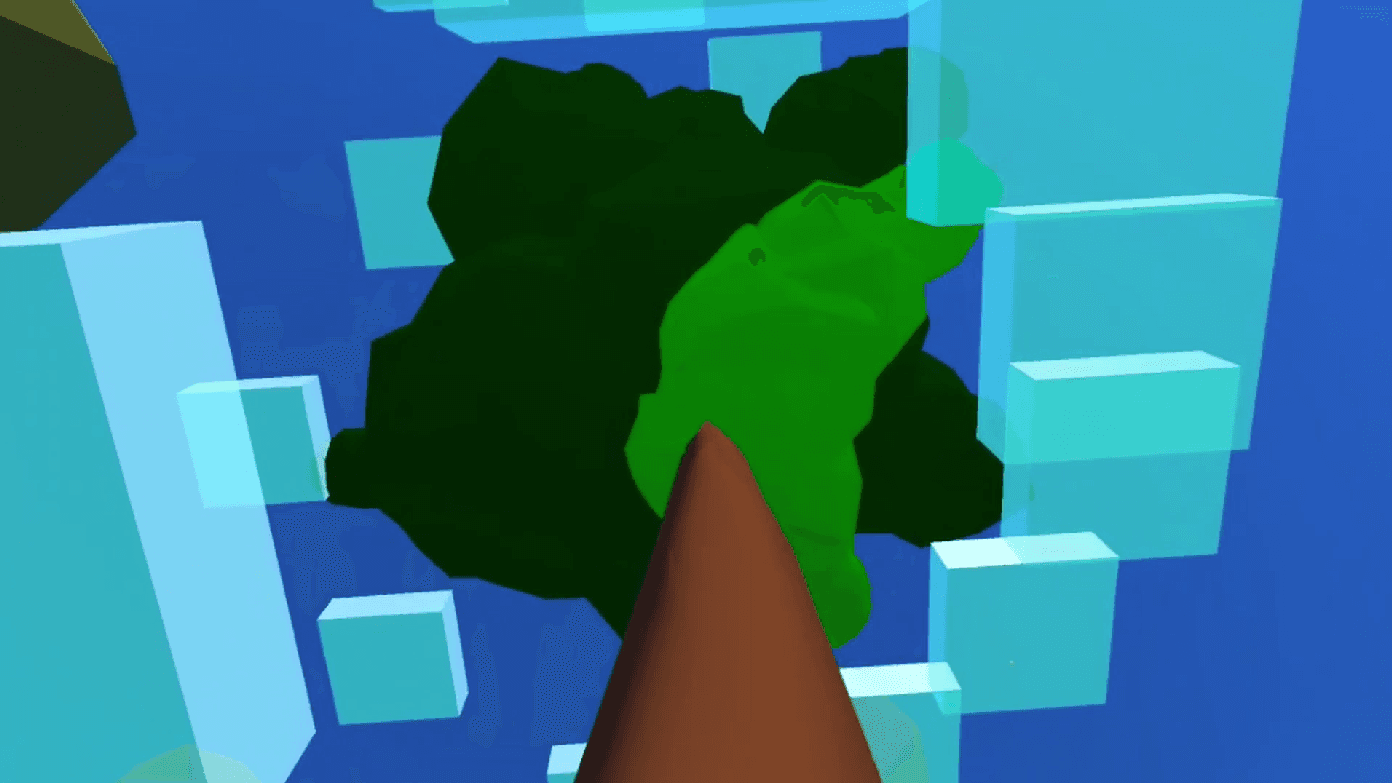
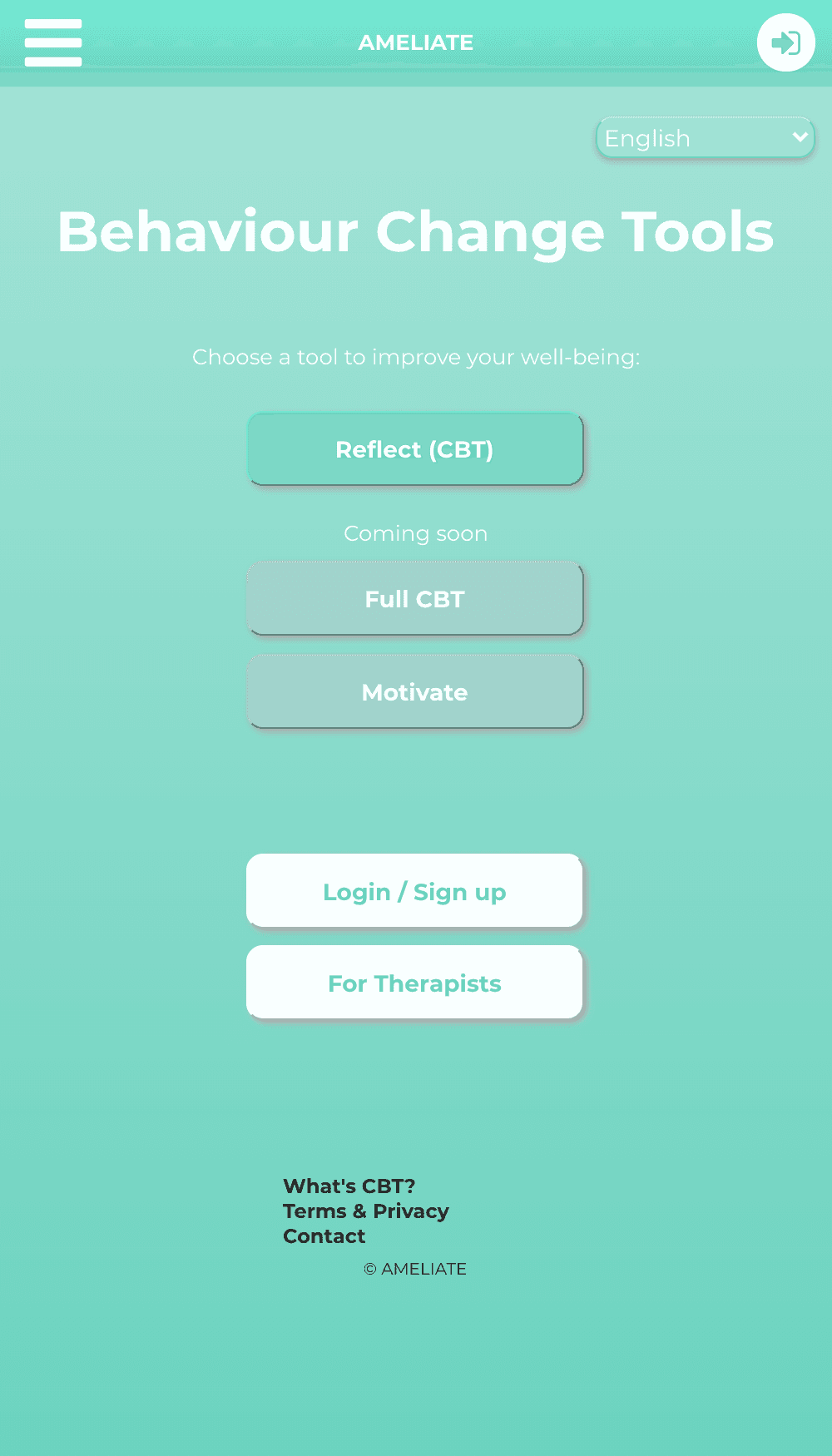
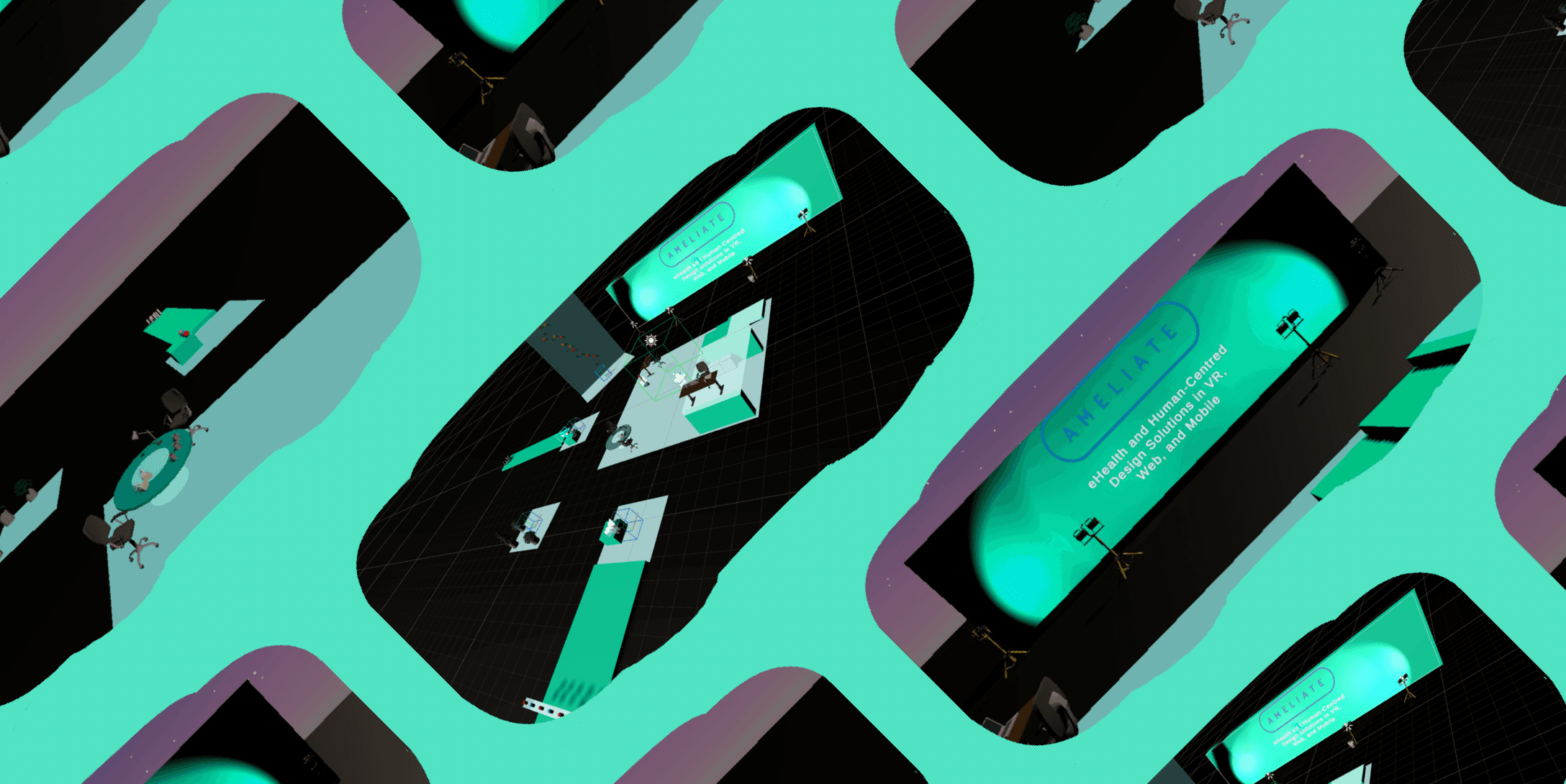
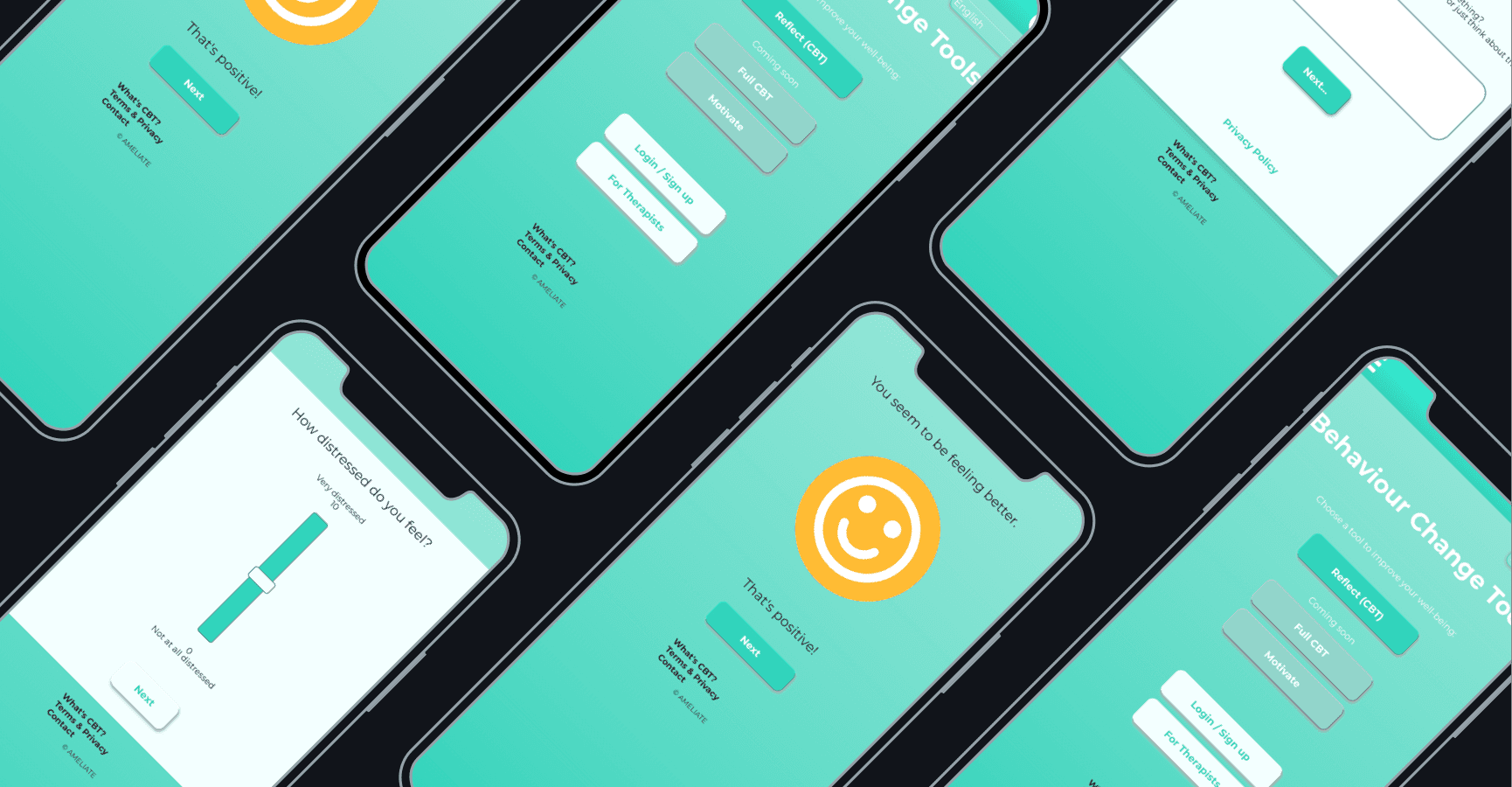
The final Ameliate suite consists of two integrated product lines: CBT-VR App Suite Immersive VR environments offering guided CBT-inspired exercises that help users identify emotions, recognize cognitive distortions, and reframe challenging situations. Self-Help CBT Web App A responsive, accessible platform for both consumers and healthcare professionals. Key features: Scenario-based CBT exercise Tracking emotions, sensations, and context Identifying cognitive biases Progress dashboards for users Professional-grade monitoring for therapists Both products showcase a human-centered, research-driven design that bridges psychological science with digital innovation.
4
Results
The final Ameliate suite consists of two integrated product lines: CBT-VR App Suite Immersive VR environments offering guided CBT-inspired exercises that help users identify emotions, recognize cognitive distortions, and reframe challenging situations. Self-Help CBT Web App A responsive, accessible platform for both consumers and healthcare professionals. Key features: Scenario-based CBT exercise Tracking emotions, sensations, and context Identifying cognitive biases Progress dashboards for users Professional-grade monitoring for therapists Both products showcase a human-centered, research-driven design that bridges psychological science with digital innovation.
4
Results
The final Ameliate suite consists of two integrated product lines: CBT-VR App Suite Immersive VR environments offering guided CBT-inspired exercises that help users identify emotions, recognize cognitive distortions, and reframe challenging situations. Self-Help CBT Web App A responsive, accessible platform for both consumers and healthcare professionals. Key features: Scenario-based CBT exercise Tracking emotions, sensations, and context Identifying cognitive biases Progress dashboards for users Professional-grade monitoring for therapists Both products showcase a human-centered, research-driven design that bridges psychological science with digital innovation.
4